
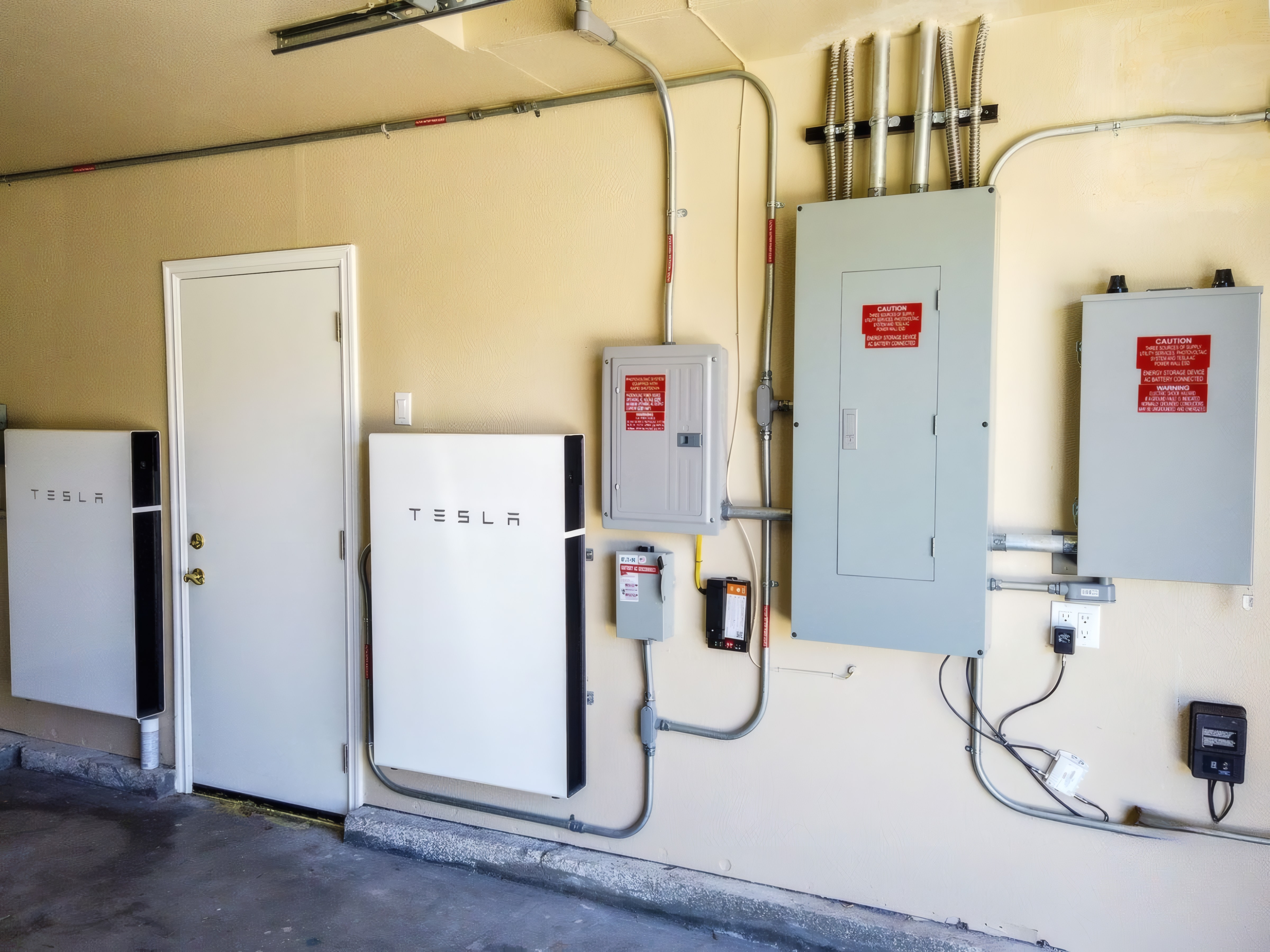
Powerwall 3 installation moves through four stages: site review and permitting, electrical preparation, battery mounting and wiring, and final commissioning with app setup. Most residential installations complete in one to two days once permits are approved.
Knowing the four stages helps homeowners manage timeline expectations and avoid surprises on install day.
An on-site assessment confirms electrical service, mounting location, and panel compatibility. Permits are filed before any physical work begins.
Service equipment is staged, conduit paths are laid, and any panel work or subpanel additions happen before the battery arrives on the wall.
The Powerwall 3 unit is secured to the mounting surface, the integrated inverter is wired to the load path, and interconnections are made to the home electrical system.
The system is energized, tested under backup conditions, and the Tesla app is paired so the homeowner has full monitoring and control from day one.
Two parallel reviews happen at every site — placement and electrical. Both inform whether the install is straightforward or requires additional scope before the battery goes up.
Powerwall 3 is a wall-mounted unit with specific weight and clearance requirements. The installer will confirm mount surface, outdoor exposure, and heat ventilation before finalizing the placement plan.
The Powerwall 3 integrates directly with the main electrical service. Service capacity, existing breaker availability, and Gateway placement all factor into the electrical plan.
Every Powerwall 3 installation starts with a live site review that confirms the requirements before any work begins. That is the fastest path to a real scope and a real timeline.
Most standard residential installations complete in one to two days once permits are approved. Electrical prep and more complex service work can extend the timeline, which is why the permit and site review stages are completed before installation day.
Not always, but it depends on the panel's age, available breaker space, and service capacity. The site review will determine whether panel work is part of the scope. Some homes require a subpanel or service upgrade before the battery can be safely interconnected.
Yes. Powerwall 3 is rated IP55, meaning it handles dust and water exposure in standard outdoor residential settings. Outdoor placements require appropriate conduit weatherproofing and may include assessment of the mounting surface and concrete pad if needed.