
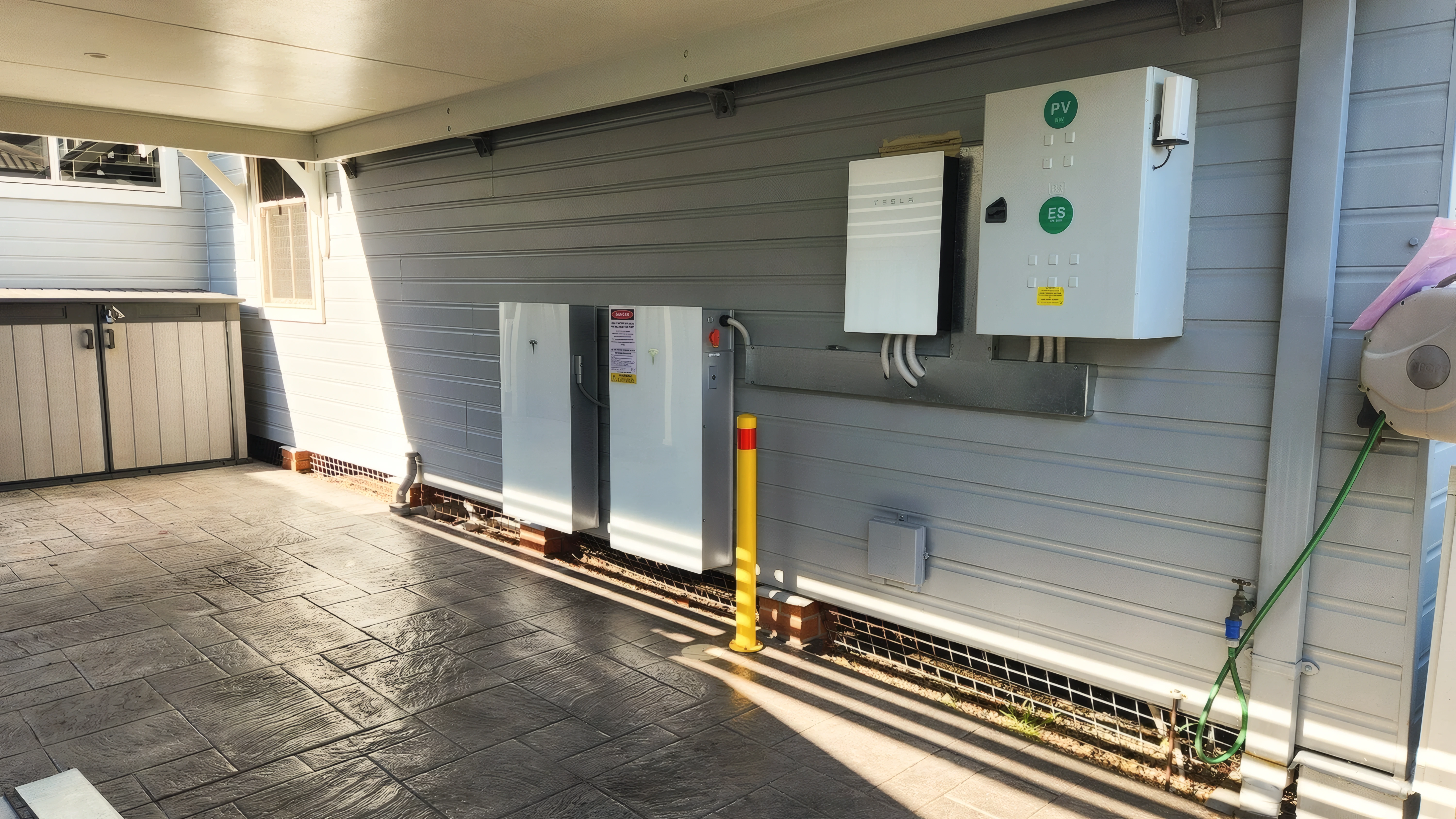
The Tesla Powerwall 3 Expansion Pack allows homeowners to scale their energy storage capacity by adding units in series. Each expansion unit adds 13.5 kWh of usable capacity, allowing you to build a system that fits your home's exact backup and runtime needs. Expansion only makes sense when the home's backup target, runtime expectations, and larger loads justify the bigger design.
Adding capacity is not just about more storage — it is about extending your home's outage endurance and supporting larger electrical loads like HVAC, pool pumps, and EV chargers.
One battery is often not enough to run central air conditioning for extended periods. Expansion packs provide the necessary energy to keep your home cool.
Powerwall 3 expansion units are designed to stack efficiently, sharing the primary unit's inverter to reduce installation complexity and hardware cost.
If your goal is surviving multi-day grid failures, increasing your kWh capacity through expansion units is the most effective path.
More capacity allows for greater participation in Virtual Power Plant (VPP) programs like APS Battery Rewards or ERCOT ADER, increasing your ROI.
Tesla's expansion architecture allows for a cleaner, more cost-effective scaling path than previous generations.
Expansion units connect directly to the main Powerwall 3 unit, utilizing its powerful 11.5 kW inverter. This reduces the number of components and lowers the overall system cost per kWh.
Homeowners can stack up to 4 units (one primary plus three expansions) for a total of 54 kWh of usable energy. For even larger needs, multiple stacks can be coordinated.
The right design should show what the extra battery capacity actually buys in backup performance. We help you compare single-battery and multi-battery paths.
Once the expansion requirements are clear, the next step is a live conversation about battery count, electrical scope, and the right Powerwall path for your home.
Yes. Expansion is possible, but the right answer depends on the home's larger loads, runtime target, and whether broader coverage is worth the added project cost.
It usually makes sense when one battery cannot comfortably support the home's backup priorities, HVAC demand, or longer outage expectations.
Battery count, electrical scope, layout, pricing, and the home's supported loads all change when the design moves into a larger multi-battery plan.